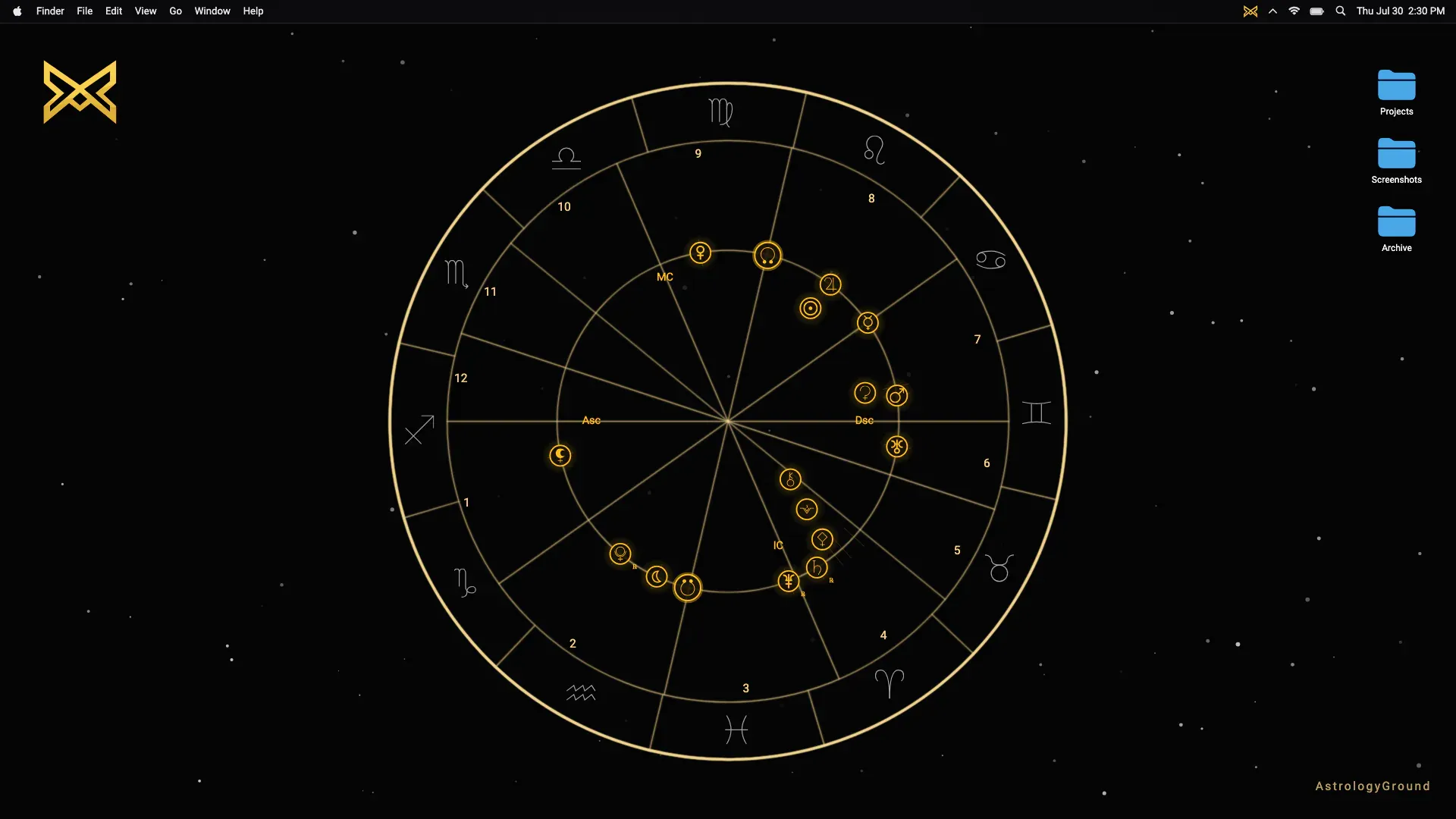
Run the same chart through Placidus, Whole Sign, Koch, and Equal houses. The Moon lands in house 2 once and house 3 three times. Its longitude never changes.
The difference comes from the house boundaries. Each system places 12 cusps with a different rule. A cusp can move past a planet even though the planet stays at the same zodiac degree.
AstrologyGround supports all four systems. We ran the same synthetic chart through each one so the difference is visible and measurable.
Use the free house-system comparison to compare Equal, Whole Sign, Placidus, and Koch houses for your own chart. Your birth details stay in your browser.
The short answer
Every house calculation starts with the same chart frame: a UTC instant, geographic latitude and longitude, the Ascendant, and the Midheaven.
The selected house system then places 12 cusps around the zodiac. A cusp is the boundary where one house starts.
- Equal starts house 1 at the exact Ascendant and advances in 30-degree steps.
- Whole Sign starts house 1 at 0 degrees of the Ascendant’s zodiac sign.
- Placidus divides diurnal and nocturnal arcs to place its intermediate cusps.
- Koch uses a different time-based construction tied to horizon positions.
The systems solve the same boundary problem with different geometry. Different cusps are the expected result.
One chart, four house systems
Our comparison holds every input constant except the house system:
- July 30, 2026 at 14:30 UTC
- latitude 44.8125° north
- longitude 20.4612° east
- tropical, geocentric planetary positions
AstrologyGround calculates the Ascendant at 253.420° and the Midheaven at 186.759°. The Sun stays at 127.454°. The Moon stays at 318.735°.
Only the house boundaries change.
| System | House 1 cusp | House 2 cusp | House 10 cusp | Sun house | Moon house |
|---|---|---|---|---|---|
| Placidus | 253.420° | 288.770° | 186.759° | 8 | 2 |
| Whole Sign | 240.000° | 270.000° | 150.000° | 9 | 3 |
| Koch | 253.420° | 279.410° | 186.759° | 8 | 3 |
| Equal | 253.420° | 283.420° | 163.420° | 8 | 3 |
The Moon makes the disagreement easy to see. Placidus places it in house 2 while the other three systems place it in house 3.
The Sun changes from house 8 to house 9 only under Whole Sign. The calculation moved a boundary, not the Sun.
Equal and Whole Sign both use 30 degrees, but start elsewhere
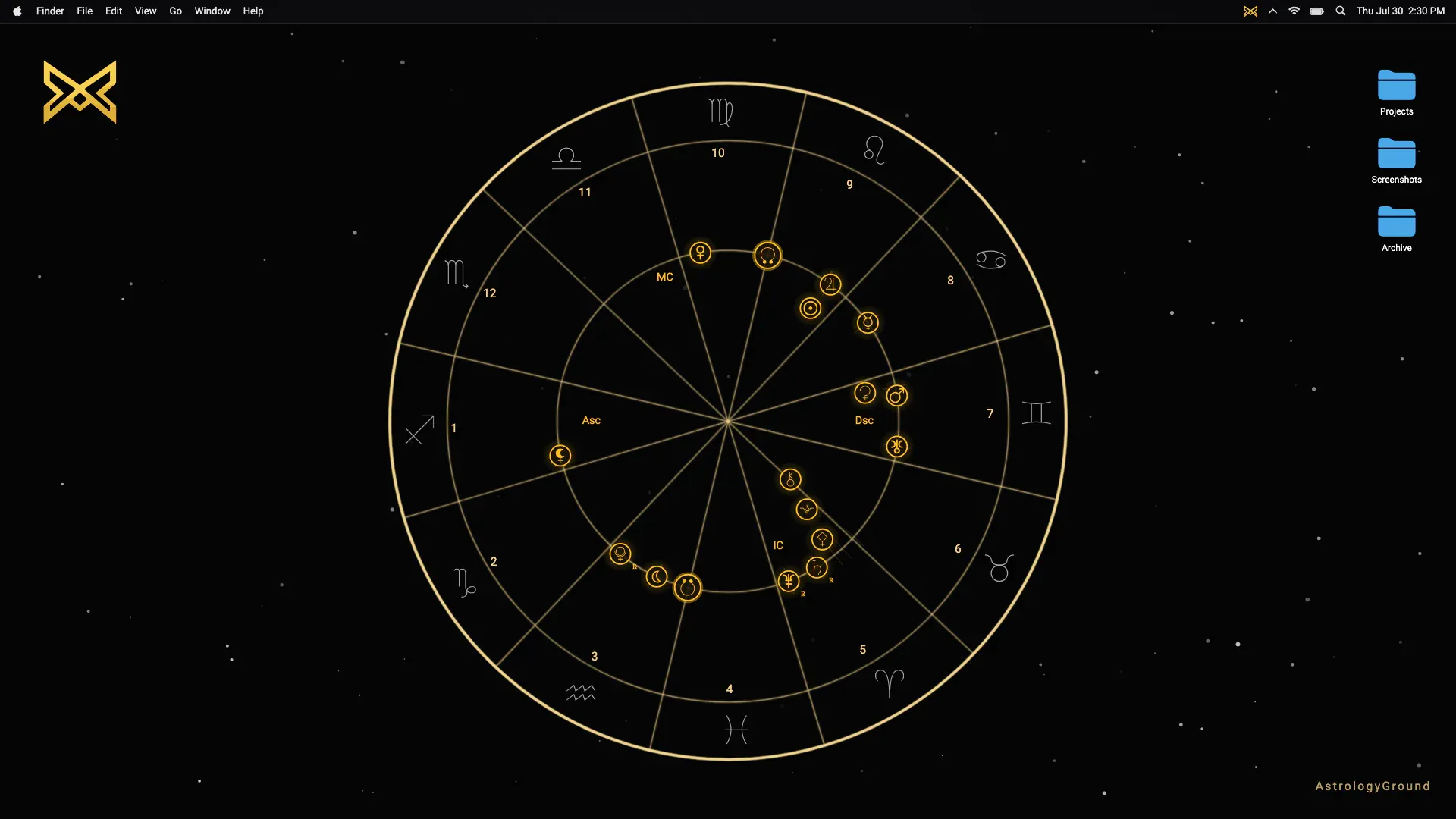
Equal houses start at the Ascendant itself. Our Ascendant is 253.420°, so the next cusp is 283.420°, then 313.420°, with 30 degrees between each boundary.
The Ascendant falls in Sagittarius, which starts at 240°. Whole Sign therefore starts house 1 at 240°, house 2 at 270°, and house 3 at 300°.
The two systems use equal-sized houses. Their starting points differ by 13.420° in this chart, so their remaining cusps differ by the same amount.
The Midheaven remains a calculated chart angle in both systems. It does not have to equal the house 10 cusp.
Placidus and Koch can create unequal houses
Placidus and Koch are time-based systems, but they do not use the same construction for their intermediate cusps.
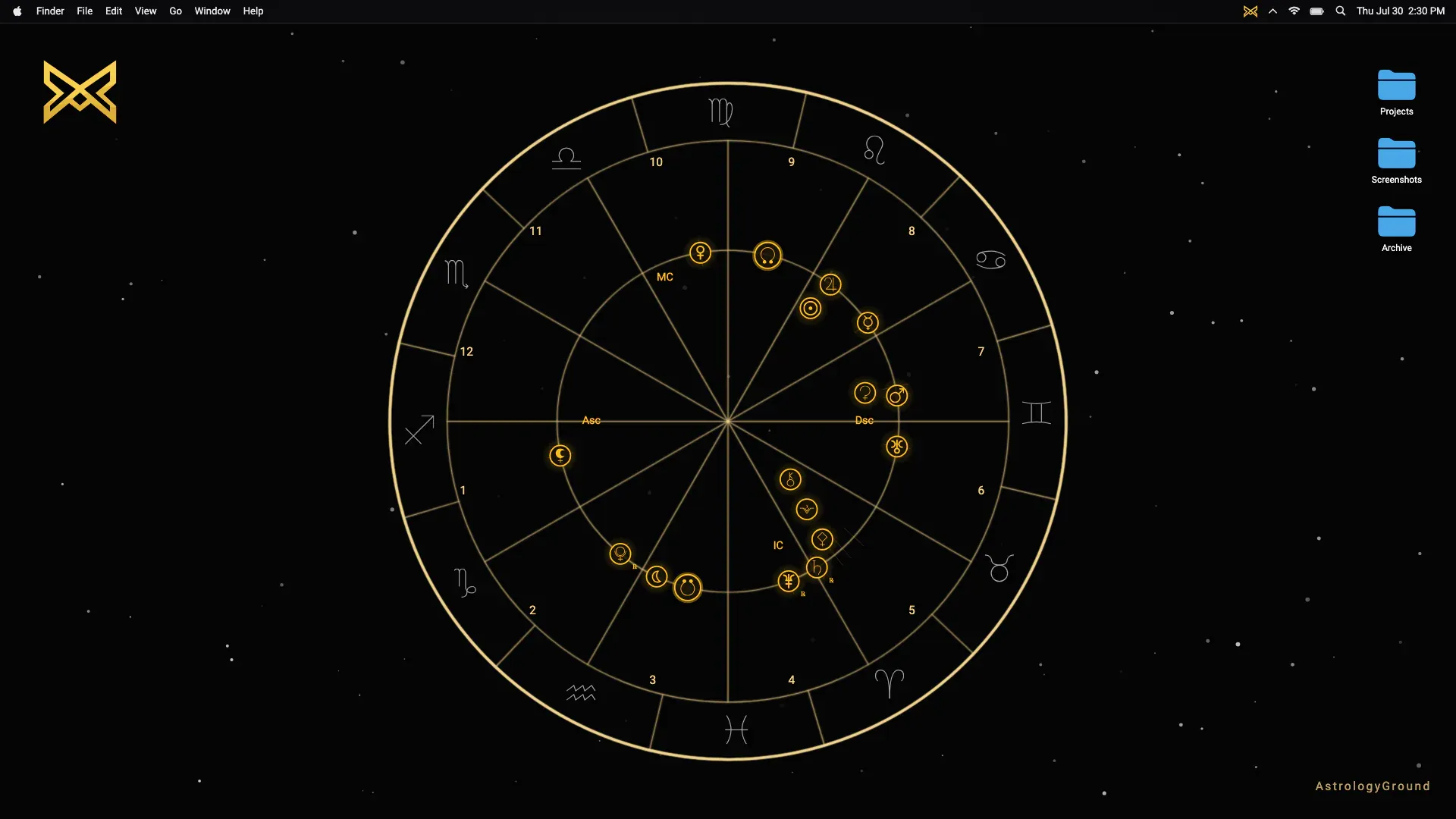
In our example, both keep the Ascendant as the house 1 cusp and the Midheaven as the house 10 cusp.
House 2 starts at 288.770° in Placidus and 279.410° in Koch, a difference of 9.360°. The chosen method produces that gap. The chart renderer does not add it.
The Swiss Ephemeris house documentation describes the arc divisions used by Placidus and the horizon-based construction used by Koch.
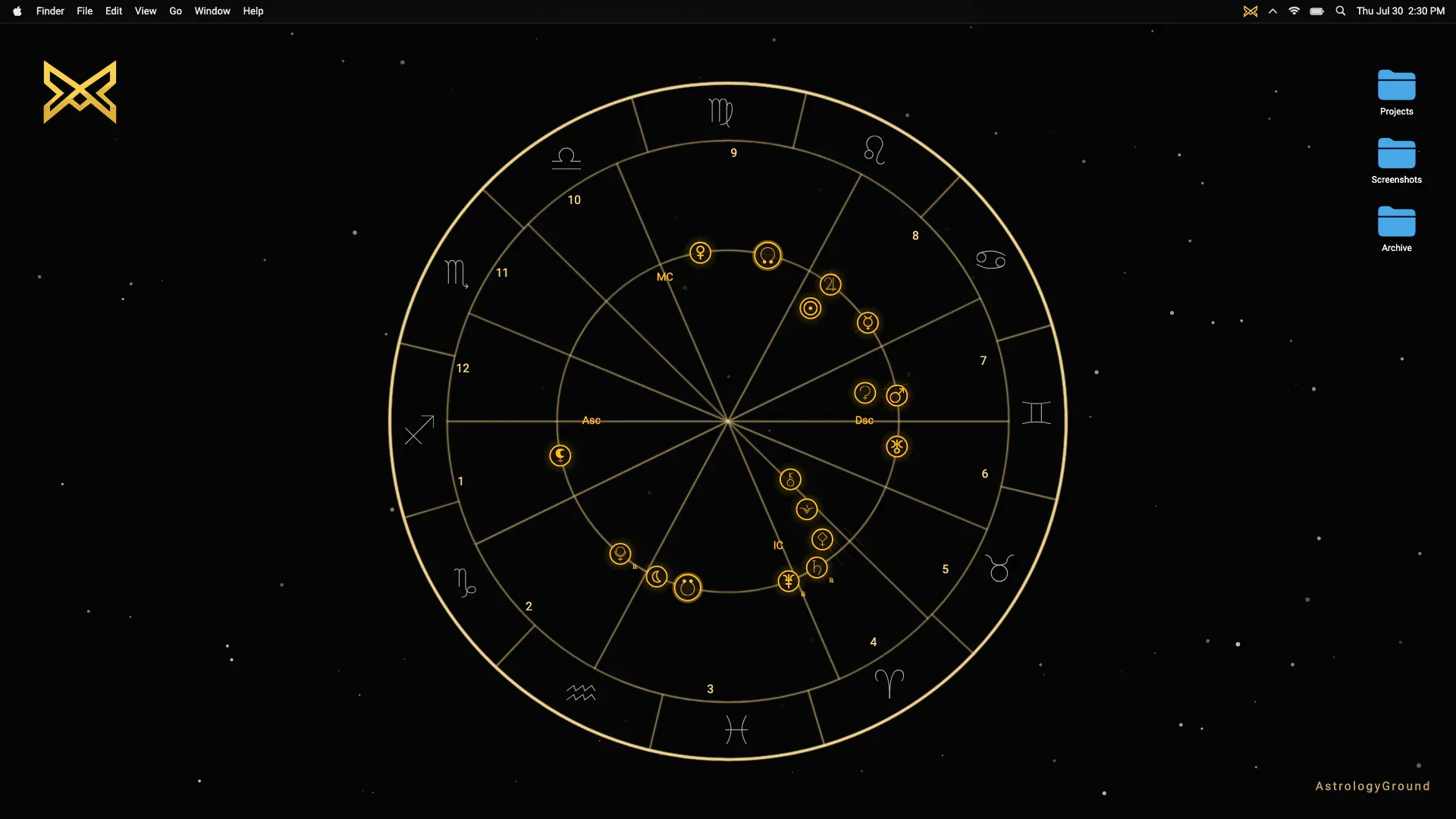
Why a planet can change houses without moving
Planetary longitude and house placement are separate results.
First, the engine calculates a planet’s longitude on the 360-degree zodiac. It then compares that longitude with the selected system’s cusp intervals.
A planet near a changed boundary can land in another house. Its zodiac sign and degree remain the same.
Two apps can agree that a planet is at 18.735° Aquarius and still place it in different houses. Compare the house-system setting before treating the difference as a calculation error.
What happens near the polar circles
Placidus and Koch cannot produce their normal cusps at some high latitudes. AstrologyGround checks this condition instead of returning a broken chart.
When either calculation fails at the polar threshold, the engine uses Whole Sign and records that a fallback occurred. Equal and Whole Sign do not need that fallback.
Swiss Ephemeris takes a different approach. Its direct API supplies Porphyry cusps and returns an error for Placidus or Koch beyond the polar circle.
AstrologyGround uses an explicit Whole Sign fallback at its product boundary.
Which house system should you use?
Calculation alone cannot choose a best system. Each system defines the boundaries it intends to calculate.
For a fair comparison:
- Keep the birth date, time, location, zodiac mode, and planet positions fixed.
- Change only the house system.
- Compare the cusp degrees before comparing interpretations.
- Check planets that sit near a changed cusp.
- Record the selected system when you save or share the chart.
If two charts disagree, start with those settings. The broader natal chart calculation guide shows where houses fit into the full pipeline.
The guide to birth time and location explains why the chart frame also depends on the recorded time and place.
How AstrologyGround uses the result
AstrologyGround calculates the cusps and renders them as the fixed house frame inside its live astrology wallpaper. The current sky can move around that frame without changing the natal house calculation.
DagazLabs tests all four supported systems against fixed engine cases. The worked example above comes from the same native calculation path used by the app, not a hand-drawn chart.
This article explains geometry, not interpretation. It does not rank the systems or claim that one produces a more meaningful reading.
Watch the house-system comparison
Watch the house-systems video on YouTube, or use the player below. It shows how a changed house boundary can give the same Moon a different house number.